
How to Prepare Bridal Measurements for Your Gown
Learn how to prepare bridal measurements for a custom wedding dress, from what to wear to when to measure, so your gown feels comfortable and true to you.
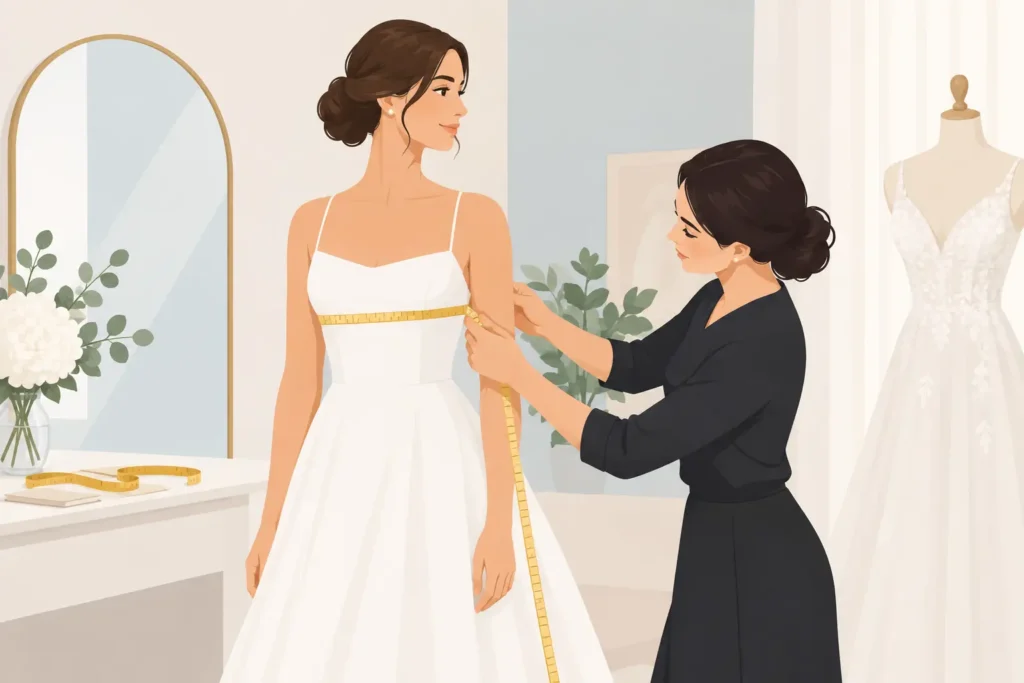
A custom gown begins with more than a beautiful sketch or a saved inspiration photo. When you prepare bridal measurements thoughtfully, you give your dress the best possible foundation: a fit that supports you, moves with you, and lets you stay present for every part of your celebration.
At Glam by Nanie, measurements are not a test you have to pass or a number you need to change. They are simply the details that help create a gown around your body, your proportions, and the way you want to feel on your wedding day. A few simple preparations can make your appointment more comfortable and help your designer capture the most accurate fit.
When to Schedule Your Bridal Measurements
The best time to take bridal measurements is when your body and wedding plans are relatively stable. For most brides, this happens after they have selected their gown direction, but early enough to allow time for design, production, and a final fit check. Custom gowns can be completed in under three to four months, though starting sooner gives you more room to make considered choices about fabric, neckline, train length, and any second-look details.
Try not to schedule your appointment immediately after a major change in routine, such as starting a new fitness plan, recovering from an illness, or changing medications. Bodies naturally fluctuate, and small changes are normal. Your team will account for ease and comfort in the gown, but sharing any anticipated changes helps everyone plan wisely.
If you are actively trying to change your size before the wedding, be open about it. You do not need to delay finding the gown you love, but your designer may recommend the most strategic timing for measurements or a later recheck. Honesty is far more useful than pressure. The goal is not to make you fit a dress. It is to make the dress fit you.
What to Wear for a Measurement Appointment
Wear undergarments that are close to what you expect to wear on the wedding day. A supportive bra, strapless bra, shapewear, or seamless briefs can all affect measurements and the way a bodice sits. If you already purchased your wedding undergarments, bring them. If you have not, wear something comfortable and supportive, then let your stylist know what you are considering.
There is no need to buy special shapewear before your first appointment. In fact, it is better not to choose ultra-compressive pieces just because you think you should. A custom gown can be designed with thoughtful internal structure, lining, boning, and support. Your comfort matters as much as the silhouette.
Bring your shoes if you have them, especially if you know you will wear a higher heel, platform, or a particular style of boot. Shoe height affects the hem and can influence posture. If your footwear is not selected yet, share the heel height you are considering. For a beach wedding, garden ceremony, or reception where you plan to change into flats, that conversation matters too.
Choose easy clothing for the appointment, such as a simple dress, leggings and a top, or anything you can change out of comfortably. Avoid bulky jeans, oversized sweatshirts, or layers that make changing difficult. You should feel relaxed, not overprepared.
How to Prepare Bridal Measurements Without Stress
You do not need to measure yourself at home unless your designer has specifically asked you to. Bridal measurements are more precise than measuring for everyday clothing, and it is difficult to accurately measure your own back, shoulder points, bust level, or hollow-to-hem length. A second person can help, but a professional fitting appointment remains the most reliable choice.
Before you arrive, eat and drink normally. Skipping meals, restricting water, or trying to look smaller for an appointment will not create a better result. It can leave you uncomfortable and can produce measurements that do not reflect how your body feels through a full wedding day.
Come with a few photos that show what you are drawn to, but do not worry about knowing the exact names for every detail. Your designer can help translate “I want to feel snatched but still able to sit” or “I love this neckline, but I need more support” into practical design decisions. A photo can show a mood, while your measurements help determine how that look can work beautifully for you.
It also helps to think through your wedding day movement. Will you be walking down a long aisle, hugging dozens of guests, dancing for hours, lifting your arms for photos, or changing into an after-party look? Let your stylist know. A fitted corset gown and a flowing A-line can both be comfortable, but they offer different levels of structure and movement. There is always a balance between a dramatic shape and all-day ease.
The Measurements That Shape Your Gown
A bridal fitting typically considers much more than bust, waist, and hips. Your designer may also measure the fullest part of the bust, underbust, shoulder width, torso length, arm circumference, bicep, wrist, neck, back width, and skirt length. For fitted gowns, measurements through the seat and upper thigh may be relevant as well.
These details help create a gown that looks intentional from every angle. They influence where a waist seam lands, how a neckline rests against the body, whether sleeves feel restrictive, and how a train falls behind you. For a dress with a low back, built-in cups, off-the-shoulder sleeves, or a corseted bodice, precise measurements are especially valuable.
Your team may take photos during the fitting process to document proportions and design placement. This is normal in a custom process and can help ensure that lace appliqué, boning lines, beading, or draping are placed thoughtfully. Ask questions whenever you want clarification. You deserve to understand how your gown is being made for you.
Be Honest About Fit Preferences
The most useful thing you can bring to a measurement appointment is clear feedback. Some brides love a secure, sculpted fit through the waist. Others want to breathe easily, eat dinner, and dance without thinking about their bodice. Neither preference is wrong.
Tell your designer if you usually need more room in your ribcage, prefer not to show underarm area, have one shoulder that sits differently, wear a prosthesis, have sensory sensitivities, or need extra support in the bust. These are not difficult requests. They are exactly the kind of details that make a made-to-measure experience worthwhile.
The same goes for coverage. You can love a deep V-neck in a photo and still decide you want a little more security when you try it on. You can adore a fitted silhouette while requesting a skirt that allows an easier stride. Personal style should never require you to ignore your comfort.
After Your Measurements Are Taken
Once your measurements are complete, keep your final undergarments, shoes, and expected heel height as consistent as possible. If you make a significant change, such as switching from a two-inch heel to a five-inch heel or choosing dramatically different shapewear, tell your bridal team as soon as you can.
Continue caring for your body in the way that feels right for you. There is no need to chase a particular number after your measurements are taken. If your body changes noticeably, reach out rather than worrying quietly. A good custom experience includes communication, not guesswork.
When it is time for your final fitting, move in the gown. Sit down, raise your arms, take a few steps, and practice the kind of movement you expect on the wedding day. A perfect fit is not just about how a gown looks standing still. It is about feeling supported when you hug your partner, laugh with your friends, and step onto the dance floor.
Your measurements are the beginning of a gown made around your life, not a standard you need to meet. Arrive comfortable, communicate openly, and let the details do their work so you can focus on the moment the dress becomes unmistakably yours.