
Custom Wedding Dress Timeline for Your Big Day
Plan your custom wedding dress timeline with confidence, from first fitting to final pickup, with practical timing tips for a gown that feels like you.
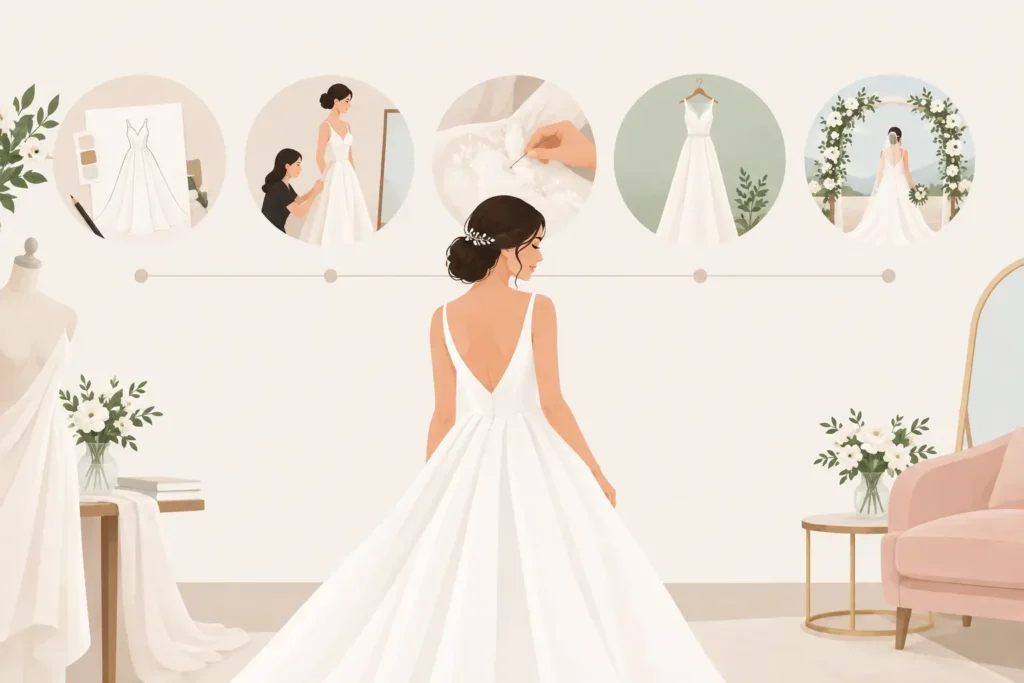
The best custom wedding dress timeline starts before the dress feels urgent. Your gown is more than a beautiful look for photos. It is the piece you will move, hug, dance, sit, celebrate, and make memories in. Giving yourself the right amount of time means you can choose details you love, make thoughtful decisions, and arrive at your wedding day feeling comfortable and completely yourself.
Custom does not have to mean a year-long couture process or a budget full of surprises. It does mean that timing matters. Fabric availability, the complexity of your design, your wedding date, and the number of looks you want all shape the path from first appointment to final pickup.
When to Start Your Custom Wedding Dress Timeline
For most brides, beginning 6 to 9 months before the wedding offers the most flexibility. This window gives you room to explore silhouettes, refine your vision, select fabrics, and schedule fittings without making every decision under pressure. It is especially helpful if you are considering a fully original gown, intricate lacework, hand-applied embellishment, a dramatic train, or multiple bridal looks.
That said, every bride’s timeline is different. A made-to-measure gown based on an existing design can often move more quickly than a gown built from a detailed sketch. At Glam by Nanie, custom wedding dresses are typically completed in under 3 to 4 months, depending on the design and materials. That can be a wonderful option for brides with a shorter engagement, a changed wedding date, or a clear vision they are ready to bring to life.
The earlier you begin, the more choice you have. Starting later is still possible, but it may require a more edited design, faster decisions, or alternative fabric selections. A private consultation is the best place to get an honest answer about what works for your date.
6 to 9 Months Out: Define the Dress You Want to Wear
This is the ideal time for discovery. Save the dresses that make you pause, but look beyond the photo. Ask yourself what you are drawn to: a clean, sculpted satin gown; soft tulle with movement; fitted lace; a statement sleeve; an open back; or a detachable overskirt that changes the mood from ceremony to reception.
At your first custom bridal appointment, the focus should be on translating inspiration into a dress that makes sense for you. Your venue, season, ceremony style, and comfort level all matter. A long-sleeve crepe gown may feel perfect for an elegant winter celebration, while a lightweight corset gown with a removable skirt may better suit a Houston wedding where heat, photos, and a full dance floor are part of the plan.
This is also when measurements are taken and the design begins to take shape. Unlike an off-the-rack gown that is ordered in a standard size and altered later, a made-to-measure dress is created around your body from the beginning. That can reduce the need for costly, extensive alterations while creating a more natural fit through the bust, waist, hips, and length.
Be open about your budget at this stage. A clear number helps your stylist recommend silhouettes and details that deliver the feeling you want without adding unnecessary expense. Custom bridal can be accessible luxury, particularly when the price includes the value of a gown made to your measurements rather than a standard dress plus major alterations.
4 to 6 Months Out: Approve the Design and Begin Production
Once you have selected your silhouette, fabric, and details, production can begin. This is the moment when a custom gown moves from vision to reality. You may review elements such as neckline shape, lining, sleeve style, train length, buttons, beading, appliqué placement, or a slit for easier movement.
Try not to make every decision based on what is trending online. A trend can be beautiful, but your gown should still feel like you when you look back years from now. The strongest custom designs balance personality with wearability. If you love a dramatic detachable sleeve but worry about dancing in it, consider a look that gives you both options.
Your body may also change slightly as the wedding approaches, and that is normal. The goal is not to chase a specific number on the scale for a dress. The goal is to communicate openly with your bridal team. A gown should support your confidence, not become another source of wedding pressure.
Planning a Second or Third Bridal Look
If you want a reception dress, after-party mini, or elegant cocktail look for another wedding event, decide early. Designing multiple looks together can create a more cohesive bridal wardrobe and helps you prioritize your budget across the day.
A second look does not need to compete with the ceremony gown. It can solve a practical need: more movement for dancing, a shorter hem for an outdoor reception, or a lighter fabric for a late-night celebration. Some brides choose a transformable ceremony gown instead, using removable pieces to create a new look without changing completely.
2 to 3 Months Out: Your First Fitting Is About Feel
When your gown is ready for its first fitting, bring the foundation pieces you expect to wear on the wedding day. That may include your shoes, shapewear, bra cups or undergarments, and any accessories that affect the neckline or overall balance of the dress.
This fitting is not only about checking measurements. It is where you test the real-life experience of wearing your gown. Walk across the room. Sit down. Raise your arms. Practice a hug. Turn around as if you are greeting guests. If you plan to dance, move enough to notice whether anything pinches, slips, or feels too restrictive.
A custom gown should feel secure without feeling like you cannot breathe. Some structured dresses need a short adjustment period, particularly with corsetry, but discomfort should never be dismissed as part of being a bride. Speak up about what you feel. Small refinements can make a meaningful difference by the time your wedding day arrives.
4 to 6 Weeks Out: Final Details and Final Fitting
Your final fitting confirms that the gown is ready for the celebration ahead. Hem length is checked with your actual shoes, the bustle is reviewed if you have a train, and the fit is assessed one more time. Bring a trusted person who will be with you while getting dressed if possible. They can learn how to secure buttons, fasten the bustle, or handle any detachable pieces calmly on the wedding day.
This is also the right time to make a simple gown plan. Decide who is transporting the dress, where it will be steamed, and where you will get dressed. If you are traveling for your wedding, ask your bridal team how to pack, carry, and care for your gown safely. Do not leave steaming or last-minute repairs until the morning of the wedding.
Avoid making major style changes at this point unless they are truly necessary. A different veil, earrings, or hairstyle can refresh your look without disrupting a gown that has already been thoughtfully designed for you.
What Can Change a Custom Dress Timeline?
Some details naturally require more lead time. Imported or limited-availability fabrics, custom lace, detailed beading, and highly structured construction can lengthen production. A wedding during peak bridal season may also affect appointment availability. If you are working on a shorter timeline, choosing readily available fabrics and a design with fewer labor-intensive details can keep your dress personal while protecting your date.
The most helpful thing you can do is share your wedding date from the first conversation. A knowledgeable bridal team will be transparent about whether your vision, budget, and timeline align, then help you find the best path forward.
Your wedding dress should not feel like a countdown clock. Start when you can, bring the ideas that feel most like you, and give yourself the gift of a gown designed for the way you want to celebrate.