How to Budget Custom Bridalwear Without Stress
Learn how to budget custom bridalwear with clear priorities, transparent pricing, and room for the fitting, fabric, and details that feel like you, too.
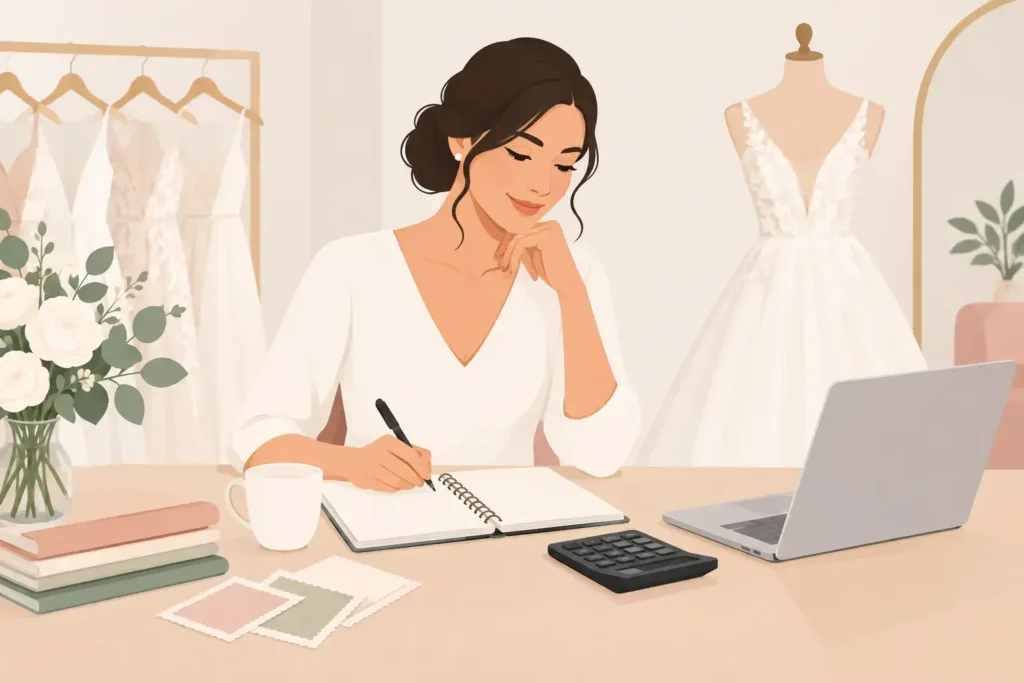
A custom gown should feel personal from the first sketch to the final fitting, not like a financial mystery. Learning how to budget custom bridalwear starts with seeing the full picture: your dress is more than a single price tag. It is the silhouette, fabric, construction, fit, and the wedding moments you want to enjoy in it.
The good news is that custom does not have to mean out of reach. With a clear spending range and honest conversations early on, you can choose a made-to-measure look that feels beautifully you without giving up the details that matter most.
Start With Your Total Bridal Fashion Budget
Before falling in love with lace, beads, or a dramatic overskirt, decide what your complete bridal fashion budget needs to cover. This is different from your overall wedding budget and different from the amount you plan to spend on the ceremony gown alone.
Your total may include your wedding dress, veil or headpiece, shoes, undergarments, jewelry, reception outfit, after-party look, and beauty appointments. If you are wearing one gown all evening, you may have more room to invest in fabric or custom details. If you want a second look for dancing, your budget may need to stretch across two pieces.
A helpful approach is to reserve the largest share for the gown you will wear during the ceremony and portraits, then set realistic amounts for finishing pieces. The exact split depends on your priorities. A bride planning a formal cathedral ceremony may place more value on a long veil and train, while a bride hosting a relaxed rooftop reception may prefer to put that money toward a versatile second dress.
Decide What “Custom” Means to You
Custom bridalwear can look very different from one bride to another. You may begin with an existing design and personalize the neckline, sleeves, skirt, fabric, or train. Or you may create an original gown from the ground up. Both can deliver a personal result, but they require different levels of design time, materials, and construction.
Be specific about the details that are non-negotiable. Perhaps you want a corseted bodice because you love the structure and support. Maybe sleeves are essential for comfort, or a detachable overskirt matters because you want two looks without buying two full gowns. When you know what truly matters, it is easier to direct your budget toward the choices you will notice and enjoy all day.
Try not to make every feature a must-have. Intricate hand beading, specialty fabrics, extensive appliqué, a dramatic train, and multiple removable pieces can all add to the final investment. That does not mean you cannot have a statement gown. It means you may choose one or two standout features and let the rest of the design support them.
Ask for a Clear Price Range Before Designing
The most reassuring bridal appointment is one where pricing is discussed openly. Share your ideal budget and your absolute maximum before the design process begins. A knowledgeable consultant can guide you toward silhouettes, fabrics, and details that honor your vision while staying within that range.
At Glam by Nanie, made-to-measure bridal gowns are designed to make custom feel more accessible, with pricing typically ranging from $1,200 to $3,500. A dress built to your measurements can also reduce one of the most common off-the-rack surprises: substantial alteration costs after the gown purchase.
When comparing options, ask what is included in the quoted price. Does it include your measurements, pattern adjustments, fittings, lining, built-in support, and the final finishing work? Are there costs for design changes after production begins? Clear answers help you compare value, not simply the lowest starting number.
Budget for Fit, Not Just the Dress
A gown can look beautiful on a hanger and still require expensive work to feel right on your body. This is where made-to-measure bridalwear offers meaningful value. Rather than buying a standard size and reshaping it afterward, the gown is created around your measurements from the beginning.
That does not mean every custom process is identical. Some designs may still require a final adjustment as your gown is completed, especially if your measurements change during wedding planning. But you should understand the fitting plan before you commit. Ask how many fittings are expected, what happens if minor adjustments are needed, and whether those services are included.
Comfort belongs in this conversation, too. A supportive bodice, the right neckline, breathable lining, and a skirt you can move in are not small details. They influence how you stand for photos, hug your guests, sit through dinner, and dance at your reception. Spending wisely means choosing a gown that works for your real wedding day, not only for the first mirror moment.
Build a Cushion for Changes and Finishing Touches
Even a carefully planned bridal budget benefits from breathing room. Set aside a cushion for the details that often come later: a veil you unexpectedly love, a change in shoes, shapewear, steaming, rush shipping if needed, or a small design update.
A cushion does not need to be dramatic. The purpose is to keep a last-minute choice from creating stress. If you do not use it, you can put it toward your honeymoon, beauty services, or the first dinner after the wedding.
Your timeline also affects the budget. Starting early gives you more flexibility with design decisions and production scheduling. A turnaround of under three to four months can be especially helpful for brides working within a shorter engagement, but earlier is still better when possible. Last-minute changes, expedited materials, or rushed production can limit choices and increase costs.
Choose Details That Create More Than One Moment
If you love the idea of multiple bridal looks but do not want to purchase several complete outfits, ask about convertible design. Detachable sleeves, an overskirt, a removable train, a cape, or a statement bow can transform a ceremony gown into a lighter reception look.
This approach works best when the add-on serves your style and your schedule. A detachable skirt can be a smart investment if you want a formal entrance followed by easy movement on the dance floor. It may not be worth it if you prefer the simplicity of one silhouette all night. There is no right answer, only the choice that feels most like your celebration.
Think beyond the ceremony, too. A custom cocktail dress or after-party gown can be an intentional part of your bridal wardrobe, especially if you want to preserve your wedding gown or change into something shorter and more playful. Plan for it from the start rather than treating it as an afterthought.
Bring Your Vision, Then Stay Open to Guidance
Save inspiration images, but bring them as a conversation starter rather than a fixed blueprint. A photo may show a detail you love without revealing the fabric weight, internal structure, or movement that made the look work. An experienced bridal designer can help translate the feeling of your inspiration into a gown that suits your body, venue, season, and budget.
Be honest about where you are willing to compromise. You might choose a clean satin skirt instead of heavily embellished fabric so you can keep the sculpted bodice you love. Or you may select a shorter train to preserve your budget for custom sleeves. These are not lesser choices. They are thoughtful decisions that make the final design feel intentional.
A Simple Way to Keep Your Spending Grounded
Before your appointment, write down four numbers: your ideal gown budget, your maximum gown budget, your accessories budget, and your total bridal fashion budget. Then write three priorities in plain language, such as “comfortable to dance in,” “defined waist,” and “a romantic sleeve.”
Bring that note with you. It gives your consultant a clear starting point and keeps the appointment focused on gowns that truly fit your plans. It also makes it easier to say yes with confidence when you find the design that feels right.
Your bridalwear budget is not a test of how much you can spend. It is a way to protect the parts of your look that will make you feel comfortable, celebrated, and completely yourself when the day finally arrives.