
Personalize Wedding Dress Design With Confidence
Learn how to personalize wedding dress design with the silhouette, fabric, details, and fit that feel true to you, without any surprise alteration costs.
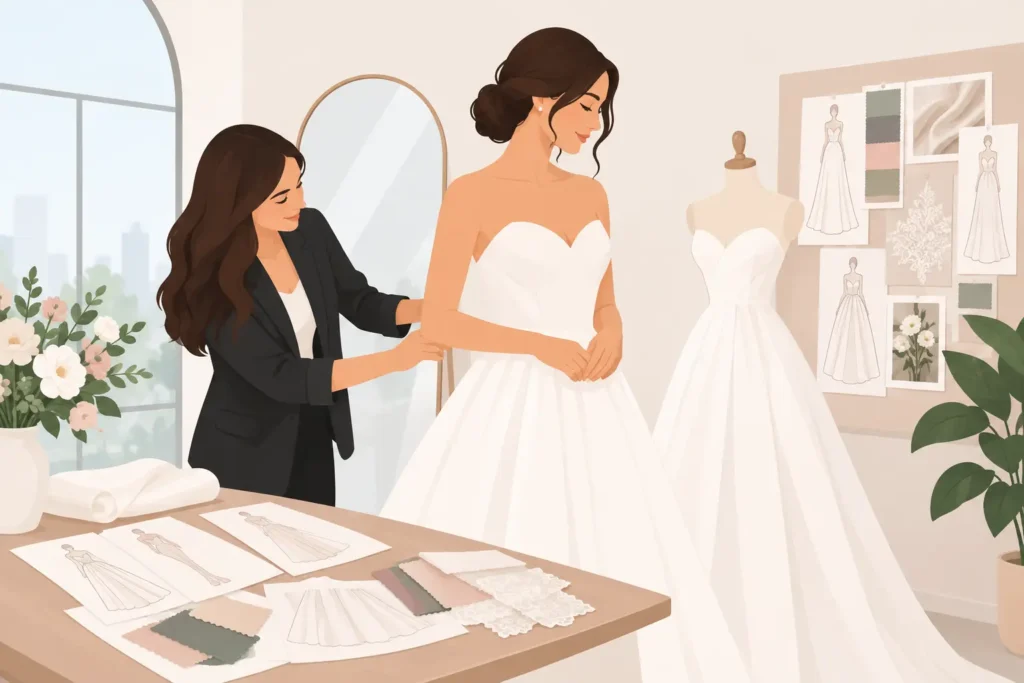
The moment you find a gown that is almost right can be more frustrating than finding one that is clearly not. Maybe you love the neckline but want sleeves, adore the fabric but need more movement, or picture a train that feels dramatic for the ceremony and impractical for the reception. When you personalize your wedding dress design, those details do not have to be compromises. They become part of a gown created around your body, your celebration, and the way you want to feel.
A custom or personalized gown is not about adding every possible detail. It is about making thoughtful choices that give your dress a point of view. The best design feels unmistakably yours while still allowing you to walk, sit, hug your people, dance, and enjoy every photo.
Start With How You Want to Feel
Before choosing lace, sparkle, or a silhouette, consider the feeling you want your dress to create. Do you want soft and romantic? Polished and modern? Confident, glamorous, and ready for a grand entrance? A few clear words can guide every choice that follows and keep the design cohesive.
Think about your wedding setting, too. A formal ballroom gown can support a fuller skirt, structured corsetry, and a longer train. An outdoor celebration may call for lighter layers, breathable lining, and a hem that is easier to move in. Neither approach is more bridal than the other. The right choice depends on your venue, season, and comfort level.
Your ceremony and reception can have different needs
Many brides want one unforgettable ceremony look but do not want to spend the entire evening managing a long train or layered skirt. Personalization can make one dress work harder. A bustle can lift a train after the ceremony, detachable sleeves can change the mood, and an overskirt can offer a dramatic aisle moment before revealing a sleeker reception silhouette.
If you are planning a separate reception or after-party look, consider how the pieces relate. Your second dress does not need to match exactly, but repeating a detail such as pearls, a floral appliqué, or the same ivory tone can make the transition feel intentional.
Personalize Wedding Dress Design From the Silhouette First
The silhouette shapes how a gown looks, but it also affects how it feels for hours at a time. Begin here before getting lost in beautiful details.
An A-line gown offers definition at the waist with ease through the skirt, making it a favorite for brides who want movement without the volume of a ball gown. A fitted mermaid or trumpet shape can highlight curves and create a striking, sculpted look, though it may feel more restrictive depending on the fabric and construction. A sheath or column gown has a modern, effortless line and can be especially elegant for city weddings, destination celebrations, or brides who prefer minimal volume.
Your ideal silhouette is not determined by a rule about body type. It is determined by proportion, support, and personal comfort. A private appointment gives you space to try possibilities, talk through what you love, and adjust a design rather than settling for a sample gown that only tells part of the story.
Necklines deserve the same attention. A square neckline can feel clean and contemporary, a sweetheart shape can be softly romantic, and an off-the-shoulder look brings a little drama without requiring a full sleeve. If support is a concern, share that early. The internal construction of the bodice matters just as much as the neckline you see in photos.
Choose Fabrics That Match Your Wedding Day
Fabric changes the personality of a dress immediately. Satin offers a smooth finish and beautiful structure, while crepe has a clean, fluid elegance that suits modern designs. Tulle creates softness and volume without necessarily adding weight. Lace can feel traditional, bohemian, fashion-forward, or glamorous depending on its pattern and placement.
It is tempting to choose fabric based on photographs alone, but touch and movement matter. A fabric that photographs beautifully may feel too heavy in Houston heat, while a lighter material may need additional structure to create the shape you want. Your gown should work with the season instead of asking you to endure it.
Details can personalize the fabric story. You might add lace only to the bodice, place pearls along the straps, use buttons down the back, or line a sheer bodice for more coverage. These choices do not need to compete. Often, one memorable detail and one supporting detail are enough to make the gown feel personal.
Consider comfort as a design feature
Comfort is not a lesser priority than style. It is what lets you stay present during your vows, accept every hug, and make it to the last song on the dance floor. Ask how the gown will feel when sitting, lifting your arms, walking up stairs, and moving through a crowded reception.
A made-to-measure dress is built from your measurements rather than purchased in a standard size and extensively reshaped later. That can create a more natural fit through the bust, waist, hips, and length while helping you avoid the usual cycle of costly alterations. The goal is not to make you fit the dress. It is to make the dress fit you.
Make the Details Meaningful, Not Busy
Personal details are often the ones that make a bride pause when she sees her completed gown. A hidden blue accent, a piece of family lace incorporated into the lining, or a small embroidered date can be deeply meaningful without changing the overall design.
You can also personalize more visible elements: sleeve length, a higher back, a leg slit, a corset-style bodice, a detachable bow, or a custom train length. The trade-off is balance. If your gown has intricate lace, beading, a statement sleeve, and a dramatic overskirt, it can become difficult for each element to shine. Your designer can help identify the detail that should lead and which ones should stay subtle.
Bring inspiration to your appointment, but do not feel pressure to copy one image exactly. A photo may show the neckline you love, another may have the right skirt movement, and a third may capture your ideal level of sparkle. Those references are useful starting points for a design that belongs only to you.
Plan Around Budget and Timing Early
Customization should feel exciting, not uncertain. A clear budget helps narrow fabric, embellishment, and construction choices from the beginning. A personalized gown can be an accessible luxury when pricing is transparent and the dress is designed with intention rather than added extras that do not serve your vision.
At Glam by Nanie, made-to-measure bridal gowns are designed to offer that balance, with styles and custom options typically ranging from $1,200 to $3,500. Production can be completed in under three to four months, which is especially reassuring for brides who do not want an extended timeline. Your exact timing will still depend on the complexity of the design, fabric availability, and any changes requested along the way.
Give yourself room for the process. The most successful custom experience includes a focused consultation, measurements, design decisions, and honest communication about what is possible within your date and budget. If a feature would add time or cost, you deserve to know before moving forward, not after you have fallen in love with it.
Arrive at Your Appointment Ready to Collaborate
You do not need to arrive with every answer. In fact, many brides discover their strongest preferences once they begin trying on silhouettes and feeling fabrics in person. Come with your wedding date, venue details, approximate budget, and a few saved images that show what you are drawn to.
It also helps to wear or bring undergarments similar to what you may choose for the wedding day. Most importantly, be honest about what has not worked during previous appointments. If sample dresses have felt too tight in the ribs, too long in the torso, too exposed, or simply unlike you, those are valuable design clues.
Your gown should feel like a celebration of your style, not a costume for someone else’s idea of a bride. Choose the details that make you stand taller, breathe easier, and recognize yourself in the mirror. That is the kind of personalization you will remember long after the last dance.