
The Right Reception Dress for a Bride to Wear
Find the perfect reception dress for a bride who wants style, comfort, and movement. Choose a personalized, polished, party-ready second look tonight.
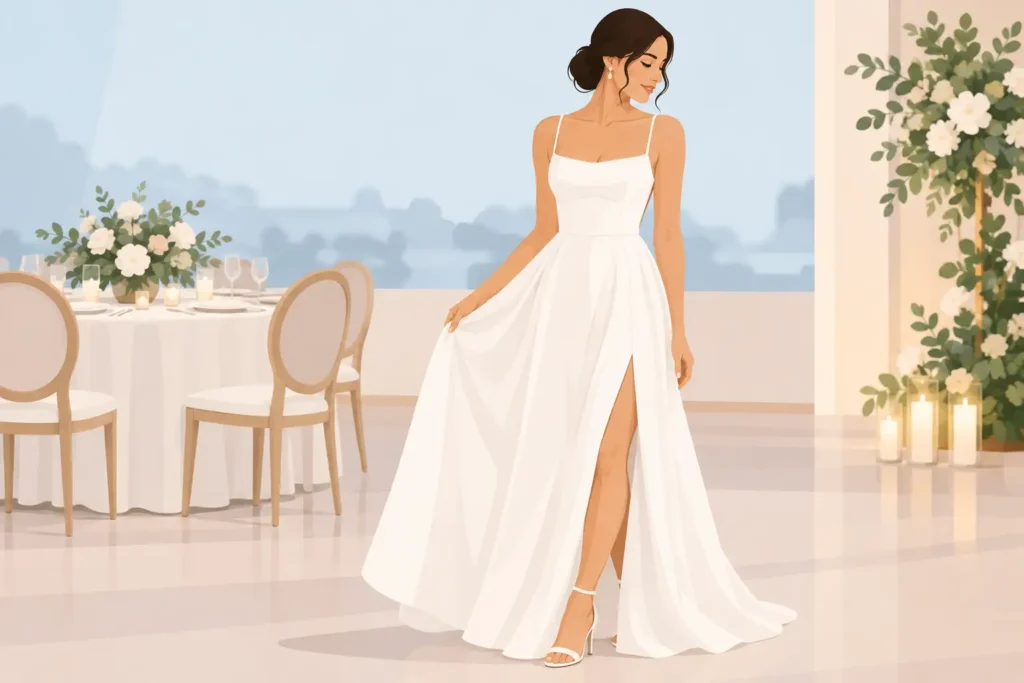
The ceremony may call for a sweeping train and a cathedral-length veil. The reception calls for you to hug every guest, eat dinner comfortably, dance without holding up your hem, and actually enjoy the party you planned. A reception dress for a bride is not an afterthought or an extra outfit for the sake of it. It is a chance to choose a look made for celebrating.
For some brides, that means trading a structured ball gown for a fitted mini. For others, it means keeping the same bridal silhouette but choosing lighter fabric, a shorter train, or detachable details. The best choice is the one that feels like you, only freer.
Start With the Moment You Want to Create
Before looking at necklines or embellishment, think about the feeling of your reception. A candlelit dinner in a formal ballroom invites a different look than a rooftop celebration, backyard party, or late-night dance floor. Your second dress does not need to match the ceremony gown exactly, but the two should feel connected to the same wedding.
If your ceremony look is classic and understated, a satin column dress with an open back or a subtle slit can feel beautifully intentional. If you wore romantic lace for the ceremony, a beaded midi dress or soft tulle mini can carry that same femininity into the evening. Brides who want a more dramatic change may choose feathers, fringe, sparkle, or a fashion-forward two-piece.
The goal is not to follow a rule. It is to make the transition feel exciting without feeling like you have changed into someone else’s dress.
Decide Whether You Need a True Second Dress
A second look is wonderful, but it is not required. If you love your ceremony gown and it already allows you to move comfortably, thoughtful alterations or removable details may give you the best of both worlds. Detachable sleeves, an overskirt, a removable train, or a new pair of shoes can transform one gown for the reception.
A separate reception dress makes more sense when your ceremony gown is heavy, very formal, restrictive, or difficult to bustle. It can also be the right choice if you want to protect delicate fabric from a long night of dancing, outdoor photos, or a lively after-party.
Consider your timeline, too. If your reception starts immediately after the ceremony, you may not want to spend precious time changing. If cocktail hour creates a natural break, a quick outfit change can become part of the celebration. There is no wrong answer – only the version of the evening you want to experience.
Choose a Reception Dress for Bride Comfort First
Comfort is not separate from style. When a dress fits correctly, you stand taller, move naturally, and look more confident in every photo. Your reception dress should let you sit through dinner, raise your arms on the dance floor, and walk without worrying about a strap slipping or a zipper digging in.
Pay close attention to the bodice. A corseted or heavily boned top can look stunning, but it should be fitted to support you without making it hard to breathe. If you are planning high-energy dancing, test the range of motion in your shoulders and arms. If you are choosing a mini dress, make sure the length feels secure when you sit and bend. These practical details are what turn a beautiful look into a dress you can wear all night.
Fabric plays a major role as well. Crepe, lightweight satin, chiffon, and stretch-lined lace often feel easier to move in than dense beading or multiple layers of tulle. That does not mean you have to skip glamour. A sleek dress with crystal straps, pearl buttons, or an embellished overskirt can still shine under reception lighting without adding unnecessary weight.
Keep the Two Bridal Looks Connected
Your reception look can be a surprise, but a few visual threads will make your full wedding wardrobe feel cohesive. You might repeat the same ivory tone, use a similar neckline, or carry over a special detail such as floral appliqué, pearls, bows, or a structured corset.
Accessories are especially helpful here. Wear the same earrings with both dresses, or save a statement pair for the reception reveal. A bridal jacket, gloves, hair bow, or standout heels can bring personality to a simple second dress. If your ceremony veil is part of your dream bridal moment, you can wear it for portraits and remove it once the party begins.
You also do not have to choose white. Soft champagne, blush, silver, pale blue, and floral prints can be beautiful reception choices when they align with your wedding style. Still, many brides love the unmistakable feeling of another white dress. It depends on whether you want a continuation of your bridal look or a playful fashion moment all your own.
Make Fit Part of the Plan, Not a Last-Minute Expense
Reception dresses are often purchased quickly because they are shorter or seem less formal than a wedding gown. But a shorter dress can reveal fit issues more easily, especially around the bust, waist, and hem. A dress that is even slightly too loose may shift while you dance. One that is too tight can limit movement long before the last song.
Made-to-measure design gives you more control from the beginning. Instead of selecting a standard size and hoping alterations solve every concern, you can choose a silhouette with your proportions, comfort, and reception plans in mind. You can adjust the neckline, sleeve length, skirt volume, coverage, and details before the dress is made.
That personal approach is especially valuable for brides who have struggled with fit in traditional bridal stores or do not want surprise alteration costs added to their budget. At Glam by Nanie, custom bridal looks are created to your measurements, so the dress begins with a more personal foundation rather than requiring you to compromise with a standard sample size.
Set a Budget That Includes the Whole Look
Your reception outfit budget should include more than the dress. Think about alterations, shoes, undergarments, jewelry, a bag if you want one, and any hair or makeup touch-up you may need before the change. If you are changing into a shorter dress, your shoes will be far more visible than they were beneath a ceremony skirt, so it is worth choosing a pair you can genuinely walk and dance in.
You can create a memorable second look at many price points. The key is to prioritize what matters most to you. If statement embellishment is your must-have, keep accessories simple. If a clean, minimal dress is the vision, invest in exceptional fit and a great shoe. A custom design can also help you spend thoughtfully by focusing on the details you truly love instead of paying for elements you plan to remove or alter later.
Plan the Change Without Missing the Party
A reception change should feel easy. Pack your dress, shoes, accessories, and undergarments together, and assign one trusted person to help if your dress has buttons, lacing, or a detailed closure. Ask your venue or planner where you can change privately and comfortably. A few minutes of preparation prevents the frantic search for a missing earring when your favorite song is starting.
If you want a reveal, tell your photographer and DJ in advance. They can help create a fun entrance without turning your outfit change into a production. Some brides change after the first dance; others wait until cake cutting or open dancing. Choose the moment that lets you enjoy both looks rather than rush through either one.
Your wedding dress marks the beginning of the day. Your reception dress carries you through the joy of the night. Choose the look that makes you feel light, beautiful, and fully present for every hug, toast, and song still waiting for you.