
How to Choose Wedding Dress Fabric for Your Day
Learn how to choose wedding dress fabric for your venue, season, silhouette, and comfort, with clear advice for a gown that feels beautifully you, all day.
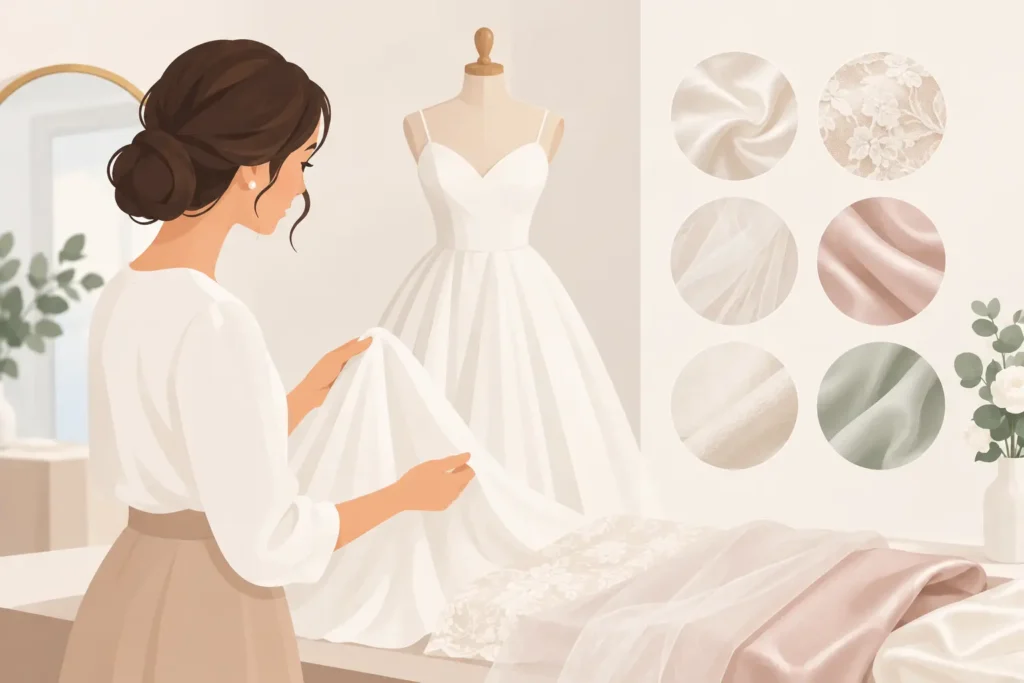
The fabric is what makes a wedding dress feel like yours the moment you put it on. It determines whether your skirt floats, holds a dramatic shape, catches the light, or moves easily with you from the aisle to the dance floor. If you are wondering how to choose wedding dress fabric, start with how you want to feel on your wedding day, not just the photo you saved.
A gown can have the right neckline and silhouette on paper, then feel too heavy, too stiff, too warm, or not quite like you once it is made. The right fabric brings your vision, venue, body, and comfort together. With a made-to-measure gown, you also have more room to personalize those details without settling for a dress that was designed for someone else.
Start With the Feeling You Want to Create
Before comparing fabrics by name, think in movement and mood. Do you picture a clean, modern gown with a sculpted skirt? A soft, romantic dress that moves when you walk? A fitted style with subtle shine? Your answer will point you toward fabrics with the right weight, texture, and structure.
For a polished, minimalist look, smooth fabrics such as crepe, mikado, satin, and duchess satin can create a beautiful clean line. Crepe has a matte, refined finish and a gentle drape, making it a lovely choice for sleek sheath, fit-and-flare, and softly tailored gowns. Mikado is more structured, with a luminous finish that gives ball gowns and architectural silhouettes their shape.
For softness and movement, chiffon, tulle, and organza offer a lighter effect. Chiffon drapes beautifully and feels airy, while tulle can create volume without the weight of a heavily layered skirt. Organza sits somewhere in between: lightweight but crisp enough to hold a little shape. These fabrics are especially pretty for flowing skirts, sleeves, overskirts, and romantic layers.
Lace adds detail, dimension, and a sense of occasion. It can be delicate and barely there or richly patterned and bold. A custom gown can use lace as an allover fabric, an appliqué, a sleeve detail, or a touch of texture at the bodice. The key is choosing a lace pattern that supports your gown’s overall style instead of competing with it.
How to Choose Wedding Dress Fabric for Your Venue
Your venue does not have to dictate your dress, but it should influence the fabric conversation. A grand ballroom, a garden ceremony, a Houston rooftop, and a beach celebration each ask different things of a gown.
For a formal indoor wedding, you may feel comfortable in fuller skirts, substantial satin, mikado, beading, or layered lace. These fabrics photograph beautifully in structured spaces and can create the drama many brides want for a ceremony entrance. If your celebration includes a long reception, consider how much weight you want to carry for several hours. A statement skirt can still feel manageable when it is thoughtfully constructed and fitted to you.
Outdoor and destination weddings often call for lighter, more breathable choices. Chiffon, silk blends, soft tulle, lightweight crepe, and delicate lace can move easily in a breeze and feel less restrictive in warm weather. A beach bride may love a flowing chiffon skirt, while a garden bride might choose floral lace over a lightweight lining for a look that feels romantic without becoming too formal.
Venue style matters, too. A simple silk crepe gown can feel striking in an industrial loft, while an ornate lace ball gown may feel right at home in a traditional estate setting. There are no hard rules here. The goal is to create a dress that feels intentional in the space where you will say your vows.
Consider the Season, Temperature, and Time of Day
Wedding dresses have more than one layer, and the lining can affect comfort as much as the fabric everyone sees. A gown with airy tulle on top may still feel warm if it has multiple dense layers underneath. During your appointment, ask about the full construction, including lining, boning, skirt layers, and sleeves.
For spring and summer weddings, breathable materials and lighter layers can make a meaningful difference. Crepe, chiffon, organza, and certain silk blends are popular options. If you love the look of a fuller gown, consider using lighter fabrics in the skirt or saving volume for a detachable overskirt that you can remove after the ceremony.
Fall and winter give you more flexibility for substantial fabrics, long sleeves, and texture. Satin, mikado, velvet details, heavier lace, and lined sleeves can feel elegant and seasonally appropriate. Still, an indoor winter reception can become warm quickly. Comfort is not less important because the calendar says winter.
If you are planning a Texas wedding, especially an outdoor celebration, be honest about humidity and timing. A late-afternoon ceremony in warm weather may call for a lighter construction than a cooler evening event. You deserve to look polished without spending the day worrying about overheating.
Match the Fabric to Your Silhouette
Fabric and silhouette work as a pair. The same cut can look entirely different in crepe, satin, or tulle.
Structured fabrics are ideal when you want definition. Mikado and firmer satins can support a ball gown, A-line skirt, pleats, dramatic bows, and clean corsetry. They help create a more sculpted shape and tend to hold their form throughout the day. The trade-off is that these fabrics usually have less fluid movement than chiffon or softer silk.
Draped fabrics suit gowns that skim the body and move with it. Crepe, charmeuse, and chiffon can look beautiful in sheath, slip, and fit-and-flare silhouettes. They often feel effortless, but they can reveal lines more readily than a thicker or more structured fabric. Proper lining and expert fit make all the difference.
Tulle is wonderfully versatile because it can be soft and barely visible or layered for volume. It works well for romantic A-lines, airy ball gowns, sleeves, and veils. Lace can be used across many silhouettes, but the scale of the pattern matters. Larger appliqués may stand out on a full skirt, while finer lace often suits a fitted gown or detailed bodice.
Think About Comfort Beyond the First Look
A fabric sample is helpful, but it cannot tell you everything in a few seconds. Move in it. Sit down. Lift your arms. Notice whether the texture feels good against your skin and whether the weight feels right for the length of your celebration.
Some brides love the luxury of beading but prefer it placed on the bodice rather than across the entire gown. Others want sleeves but choose illusion tulle instead of a fully lined sleeve for more comfort and flexibility. A long train may be perfect for the ceremony, then bustle neatly for the reception. These are not compromises. They are smart design choices that allow the dress to serve your whole day.
Also consider how the fabric photographs. Matte crepe offers a quiet, modern finish, while satin reflects light and brings a soft glow. Beading and sequins can sparkle beautifully under reception lighting, but a little embellishment often goes a long way. Your photographer, venue lighting, and personal style all play a role.
Choose a Fabric That Works With Your Budget
Fabric affects price, particularly when a gown includes silk, detailed lace, hand-applied appliqué, extensive beading, or many layers of construction. That does not mean a beautiful gown requires the most expensive material. It means your design should prioritize what matters most to you.
If you love a luxury look, a clean fabric with exceptional fit can make a powerful statement. If lace is nonnegotiable, you might use it strategically on the bodice, sleeves, or train rather than covering every inch of the gown. Choosing a detachable overskirt or reception look can also give you two distinct moments without asking one fabric to do everything.
At Glam by Nanie, fabric selection is part of a personal design conversation, so you can understand how each choice affects the gown’s look, feel, timeline, and price before moving forward. That clarity makes custom bridal feel exciting, not overwhelming.
Bring Your Inspiration, Then Stay Open
Save the gowns you love, but look past the silhouette. Notice what you are responding to: the sheen of satin, the softness of a skirt, the texture of lace, or the way a fabric holds its shape. A dress you admire online may have a look you can recreate in a fabric that feels even better for your venue and body.
The best choice is rarely about following a bridal rule. It is about choosing materials that support your vision and let you enjoy every part of the celebration. When you book your fitting, wear what makes you feel comfortable and bring a few inspiration images. From there, let the fabric tell you what your dress can become.